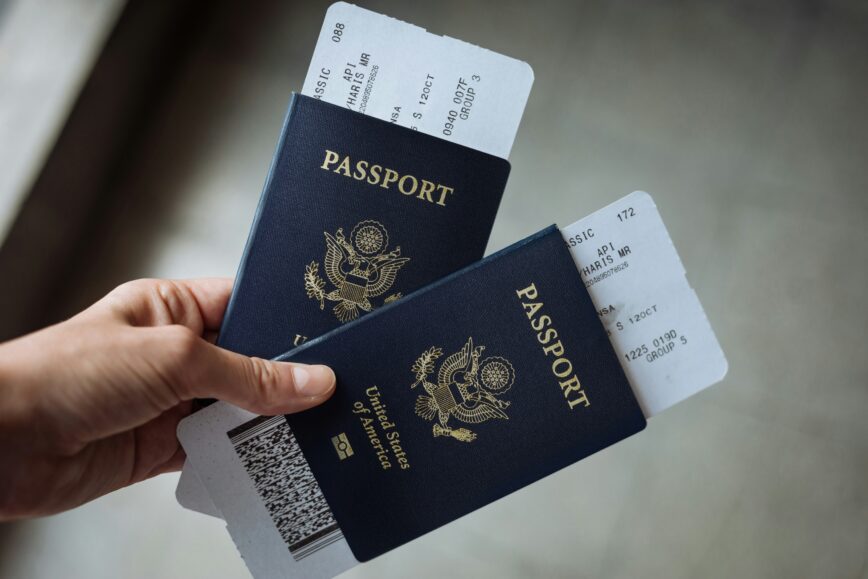
Most travelers should arrive at the terminal about three hours before an international flight. You may need more time when the airline must verify your passport or visa, you are checking bags, your check-in location differs from your departure gate, or your first flight is part of a longer international itinerary.
The three-hour window begins at the correct terminal. Driving, parking, rental-car return, and airport transportation happen before it.
Use the Airport Math calculator to turn your terminal-arrival target into a suggested leave-home time.
Quick answer
| International travel situation | Suggested terminal arrival |
|---|---|
| Standard international departure | About 3 hours before departure |
| Checked bags or document verification | Keep the full 3 hours |
| Large or unfamiliar international gateway | 3 to 3.5 hours before departure |
| Airline has not issued a complete boarding pass | Allow time to visit the counter |
| First flight is domestic but itinerary is international | Follow international check-in instructions |
| Check-in terminal differs from departure gate | Add terminal-transfer time |
| Airline publishes a different requirement | Follow the airline’s instruction |
These are planning estimates, not guarantees or airline deadlines.
My clearest reminder that “international terminal” is not always straightforward came from a Delta flight from LAX to Cancun. Our tickets said Terminal 2, but getting to the airport turned out to be only the beginning of the terminal discussion.
Why should you arrive three hours before an international flight?
International departures can require airline checks that do not apply to a simple domestic trip.
You may need time to:
- Present your passport
- Verify a visa or electronic travel authorization
- Confirm destination or transit-country requirements
- Show proof of onward travel
- Correct a reservation-name problem
- Receive a complete boarding pass
- Check bags before an earlier international cutoff
- Move between a check-in terminal and departure gate
- Complete another document check at the gate
Delta currently suggests arriving at least three hours before an international departure. It generally requires international passengers to be checked in at least one hour before departure and recommends being ready at the gate 45 minutes before departure, although some airports have different requirements.
American Airlines also recommends arriving at least three hours before flights outside the United States.
The three-hour target gives you room before those final cutoffs. A one-hour check-in cutoff does not mean arriving one hour before departure is a workable plan.
Can online check-in still send you to the airline counter?
Yes. Completing part of the check-in process online does not guarantee that the airline has finished verifying your international travel documents.
The airline may still need to:
- Scan your passport
- Review a visa or travel authorization
- Confirm your destination’s entry rules
- Check your name against the reservation
- Verify a return or onward ticket
- Accept your checked bag
- Issue or activate your boarding pass
Delta explains that international travelers need additional documentation, although some of it may be completed through the app.
If the app says “see agent,” treat that as an unfinished airport task. The app is not being mysterious for atmosphere. You still need the counter.
On my Delta trip to Cancun, having the itinerary did not settle where we needed to complete the airport process. We still had to follow the airline’s instructions once we arrived.
Can your check-in terminal be different from your departure gate?
Yes. An international flight may involve more than one terminal even when you are flying with a single airline.
On my LAX-to-Cancun trip, our tickets directed us to Terminal 2. When we arrived, we were told that we needed to check in at the Tom Bradley International Terminal, clear security, and then take a bus back to Terminal 4.
The itinerary had one plan. The airport had several.
That experience describes the trip at the time. It should not be used as current LAX terminal guidance. Terminal assignments and airline operations change.
For example, the current official LAX terminal map lists Delta check-in and departures at Terminal 3. The useful lesson is not to repeat my old route. It is to confirm both of these before leaving home:
- Where your airline wants you to check in
- Where your flight is scheduled to depart
Those locations may not be identical. Recheck your airline app and the official airport map on the day of travel.
What if the first flight on your international itinerary is domestic?
An international itinerary can begin with a domestic flight.
You might fly from a smaller U.S. airport to LAX, EWR, or ORD before boarding the international segment. The first aircraft may stay within the United States, but the airline may still need to verify your passport and final-destination documents at the first airport.
If every flight is on one reservation, confirm:
- Where your passport will be verified
- Whether your bags are checked to the final destination
- Whether you must collect and recheck bags
- Whether the connection requires a terminal change
- Whether you need documents for a transit country
- How much connection time the itinerary provides
Do not automatically use ordinary domestic timing just because the first flight is domestic. The operating airline’s international check-in requirements may still apply.
Research note: This section is based on published airline procedures and itinerary structure, not a claim that I have personally completed every type of domestic-to-international connection.
Which passport details should you check before travel day?
Airport timing cannot fix an invalid or unsuitable passport.
Before travel day, confirm:
- You have a passport book
- The passport is not expired
- It meets your destination’s validity requirement
- The name matches your airline reservation
- The passport is not damaged
- It has enough blank pages if required
- Every child has the required documents
The U.S. Department of State explains that a passport card is not valid for international air travel. A passport book is valid for international travel by air.
Some destinations also require a passport to remain valid for at least six months beyond the travel dates. The State Department’s passport guidance notes that some airlines may refuse boarding when a destination’s validity requirement is not met.
Check the official destination page instead of assuming every country uses the same rule.
Research note: Passport and entry information in this guide comes from official government sources. It is general travel planning information, not legal advice or a substitute for your destination’s current requirements.
Could you need a visa or another travel authorization?
A valid passport may not be the only document required.
Depending on your citizenship, destination, and connection, you may need:
- A visa
- An electronic travel authorization
- Proof of onward or return travel
- Documents for a minor
- Transit authorization
- Health documentation
- Proof of accommodation
The State Department’s international travel checklist recommends reviewing the entry, exit, and visa requirements for the destination and organizing required documents before travel.
Check the official government source for every destination and transit country. Entry rules can change, and an airline may need to confirm that you meet them before allowing you to board.
Why are airline cutoffs different from arrival recommendations?
An airline cutoff is the latest time it may accept your check-in or bag. It is not a suggested time to walk through the terminal doors.
For example, Delta’s published international guidance generally shows:
- Suggested airport arrival: 3 hours before departure
- Required check-in: at least 1 hour before departure
- Suggested gate arrival: 45 minutes before departure
These times serve different purposes.
If you enter the terminal at the one-hour cutoff, you may still need to find the correct counter, wait in line, complete a document check, drop a bag, clear security, and reach the gate. The airline does not owe the laws of time an apology.
Use the recommended arrival time for planning. Treat the cutoff as a boundary you should not approach voluntarily.
How does Airport Math estimate an international leave time?
Airport Math works backward from departure using the details you enter.
Its international calculation can account for:
- The selected airport’s planning estimate
- International check-in
- Standard or expedited security
- Checked bags
- Parking and shuttles
- Rental-car return
- Boarding preference
- Drive time
- An optional anxiety buffer
The calculator does not check your visa, read live traffic, or guarantee a security wait. It produces a planning estimate from the information provided.
A worked LAX international example
Suppose you have an 8:00 p.m. international flight from LAX.
You enter:
- International flight
- LAX
- 45-minute drive
- You prefer to board early
- Checked bag
- Parking and shuttle
- A little anxious
- No TSA PreCheck or CLEAR
Airport Math’s current model suggests leaving home at 3:55 p.m.
The calculation includes:
- 45 minutes of driving
- 20 minutes for parking and the shuttle
- 30 minutes for international check-in
- 20 minutes for checking a bag
- A 35-minute LAX security planning estimate
- A 20-minute just-in-case buffer
- Time to reach the gate early
That places terminal arrival at approximately 5:00 p.m., three hours before departure.
This is an original calculator example, not a recreation of my Cancun trip or a prediction of live LAX conditions. Change the inputs when your trip differs.
Frequently asked questions
Is two hours early enough for an international flight?
It may be enough in a simple situation, but it leaves less room for document verification, a counter visit, checked bags, or terminal confusion. Three hours remains the better general starting point unless your airline gives different instructions.
Should I arrive three hours before boarding or departure?
Use the scheduled departure time. For an 8:00 p.m. flight, a three-hour target means reaching the correct terminal around 5:00 p.m.
Does the three-hour recommendation include driving and parking?
No. It refers to reaching the terminal. Driving, airport traffic, parking, rental-car return, and shuttles happen before that time.
For the full leave-home calculation, read the guide explaining how early you should arrive at the airport.
Do I need three hours if I already checked in online?
Online check-in may save time, but it does not guarantee that your passport, visa, or other documents have been verified. Keep the full window if the airline app tells you to see an agent.
Do I need a passport book to fly to Mexico or Canada?
U.S. citizens generally need a passport book for international air travel. A U.S. passport card is not valid for international travel by air. Check the destination’s official requirements for your specific trip.
Is a flight to Cancun considered international?
Yes. A flight from the United States to Cancun is an international flight, even though the trip may be shorter than some domestic routes.
What if my international flight leaves from a domestic-looking terminal?
Follow the airline’s current check-in instructions. International flights do not always depart from a terminal labeled “international,” and the check-in location may differ from the gate.
What if the first flight on my itinerary stays within the United States?
The airline may still need to verify your passport and final-destination documents at the first airport. Follow the instructions for the complete international itinerary.
What time should I leave home?
Begin with a terminal-arrival target of about three hours before departure. Then add driving, traffic, parking, shuttles, rental-car return, and any personal buffer. The Airport Math international departure calculator combines those inputs.
The practical answer
Start with three hours before an international departure.
Keep the full window when you need document verification, have checked bags, are using an unfamiliar airport, or may need to move between terminals. Add driving, parking, and other ground transportation before that target.
Most importantly, confirm where your airline expects you to check in. A gate number and a check-in location are related, but airports occasionally prefer a more complicated relationship.
Last reviewed: August 4, 2026
Airline procedures, terminal assignments, passport rules, and destination requirements can change. Confirm current information with your airline, departure airport, and destination government before traveling.